
Landscape reading
Look closer at the Everglades
The Everglades is not one uniform swamp. Everglades National Park protects wetland, forest and marine habitats. A useful introduction begins with the way water, vegetation and small changes in elevation shape different places, then moves to the visitor area you actually intend to explore.
A mosaic, not a single scene
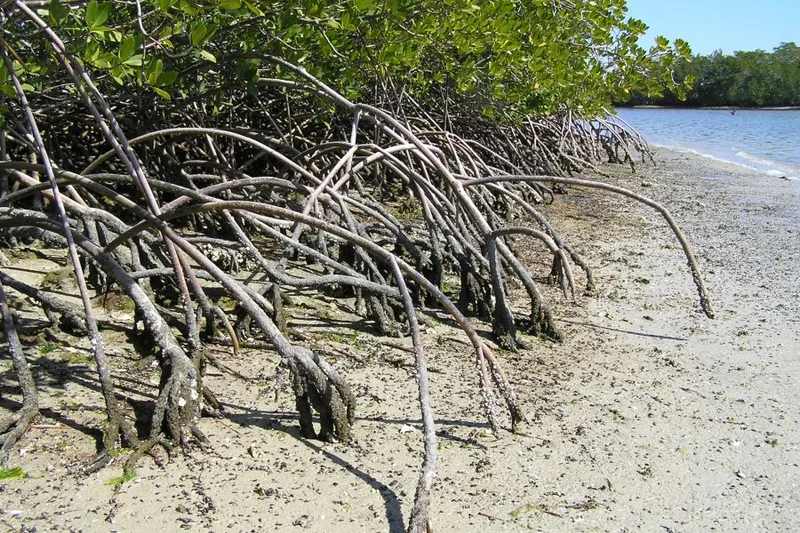
The National Park Service describes a dynamic collection of habitats. Even small differences in elevation affect which communities develop. Hardwood hammocks, pinelands, freshwater prairies and sloughs, cypress areas, coastal lowlands, mangroves and marine or estuarine waters are parts of that picture.
Those words are useful reading tools. They help explain why an open grassy view and a densely rooted shoreline can both belong to the Everglades. They do not mean that every habitat will be visible from every visitor area, or that a short visit can encompass the whole system.
Source notes: Habitats and Plant Communities
Read for water and elevation
Freshwater sloughs are important water-flow channels, while marine and estuarine habitats are a substantial part of the park. The NPS habitat overview is a better starting point than assuming all Everglades water is the same.
On a visit, an observation question might be: what changes as vegetation becomes denser, the ground looks drier, or the view opens into water? Use interpretive material to understand what you see. Do not infer an activity's suitability from the appearance of the water or from a photograph.
Source notes: Habitats and Plant Communities
Choose an entrance area before choosing a route
The park's directions page identifies three entrance areas: Homestead, Shark Valley near Miami, and Everglades City. The entrances are not interconnected inside the park. Flamingo is reached through the Homestead side rather than being a separate entrance.
This matters even for a simple day. Pick the area that fits your base and your main interest, then check its official directions, facilities and current visitor information. Do not plan by treating visitor centers with different names as neighboring stops, and do not use this guide as turn-by-turn navigation.
Source notes: Where is Everglades National Park?
Give your visit one good question
An observation-led visit is an editorial approach, not an official itinerary. Choose a question that can guide your reading: how does water shape this place, how do habitats differ, or what can interpretive signs tell me that a distant view cannot?
Keep the question small enough that it works if you spend more time at one stop than expected. A thoughtful look at a single habitat is not a failed attempt to see everything. We make no wildlife-sighting promise and do not suggest approaching animals to answer a question.
- Open landscape: notice the relationship between grass, sky and distant vegetation.
- Rooted shoreline: notice structure, shade and the boundary between land and water.
- Interpretive stop: compare the explanation with what you can actually observe.
What to verify with the park
The official planning hub covers places to go, things to do, directions, accessibility and seasonal considerations. Use those pages for specific activities and visitor needs. Check current alerts, entry requirements and operating details close to your visit rather than relying on an editorial overview.
Our role is to provide a reading framework. The park's current instructions, posted notices and staff guidance take precedence. Photographs here are credited documentary images and may not reflect the conditions, vegetation or access you encounter.
- Exact entrance and visitor area.
- Official access and current alerts.
- Accessibility information for the intended facilities.
- Rules and requirements for any planned activity.
- A practical alternative if the original idea no longer fits.
Source notes: Plan Your Visit to Everglades National Park · Where is Everglades National Park?