
Historic places
Read the place, then ask about its past
A historic site is more than an old building. Start with its material and setting, then ask who built it, who used it, and whose experiences are represented. The Castillo in St. Augustine and Fort Jefferson in the Dry Tortugas are two entry points, not a complete history of Florida.
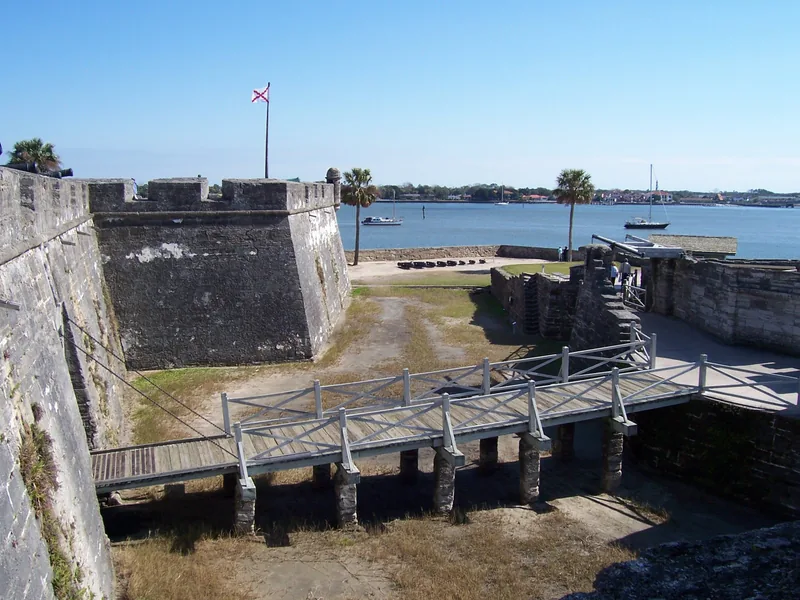
The Castillo: material and purpose together
Castillo de San Marcos was built by the Spanish in St. Augustine as a defensive fort. The National Park Service interprets its architecture and the cultural intersections around it. Its construction used coquina, a local stone that is central to the park's explanation of the building.
Look at a wall or an entrance with two questions in mind: how was it made, and what was it meant to do? The drawbridge and moat make an arrival point part of the defensive design. A photograph can help orient you, but the park's interpretation supplies the context that the image alone cannot.
Source notes: Castillo de San Marcos National Monument · Stories: Castillo de San Marcos · Castillo official image records
Do not stop at the military story
The NPS story collection includes changes of control and the fort's use for Native American incarceration, including Seminole, Plains and Apache histories. Those subjects belong in an introduction to the site, not in a footnote behind an attractive view.
Use the official interpretation as a beginning and read the named histories on their own terms. This short guide does not speak for those communities or claim to provide every perspective. A useful question for any exhibit is whose experience it explains, and what further reading it points toward.
Source notes: Stories: Castillo de San Marcos
Fort Jefferson: the setting changes the visit
Fort Jefferson stands on Garden Key in Dry Tortugas National Park. The park lies west of Key West, is mostly open water and is reached by boat or seaplane. Its setting makes the transport question inseparable from the historic-place question.
Do not treat it as the offshore equivalent of a casual town-center stop. First read the official visitor information and transport requirements; then decide how a built-history focus fits the visit you can actually make. We provide no operator endorsement, booking service or promised schedule.
Source notes: Dry Tortugas National Park
A simple way to read a historic site
Begin with the physical setting. Where is the water, entrance or surrounding settlement relative to the structure? Then choose one detail to look at carefully: a wall surface, doorway, courtyard or view from an interpreted area.
Follow that observation with a question about people and change. A building's purpose can shift, while the same material remains in front of you. Read dates and names in the site's own interpretation rather than trying to reconstruct a whole timeline from memory.
- Material: what can be observed, and what needs interpretation?
- Purpose: why did the structure matter in its setting?
- People: whose work and experiences are described?
- Change: what uses or meanings developed later?
- Evidence: which official explanation or collection supports the story?
Leave room for the interpretation
Choose one main historic place rather than making the day a succession of photo stops. Check current visitor details, accessibility and program information with the responsible park. We do not reproduce operating hours, prices or demonstration times because those belong with the official source.
When you leave, note one thing you observed and one question you still have. That distinction keeps personal impressions separate from historical claims, and makes the next piece of reading more purposeful.
Source notes: Castillo de San Marcos National Monument · Dry Tortugas National Park